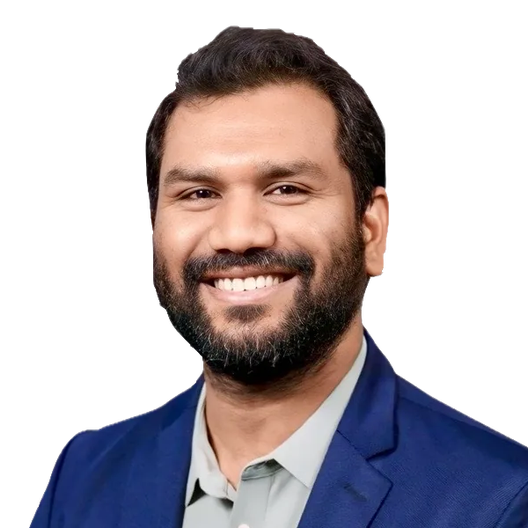
Portrait of Pradeep Ravindranath
PhD · MBA · Los Angeles County, California

Pradeep Ravindranath

Thirteen years across molecular modelling, clinical machine learning, autonomous-vehicle perception and shipped consumer software — moving between the room where a result has to be defended and the room where it has to be shipped and paid for. Below is the work itself, newest first. Every figure is from a project I did, in a domain I had to learn first.

Trained to defend a result

PhD, Computational Chemistry
Singapore-MIT Alliance · 2008–2013
Full fellowship. Inverse design of protease inhibitors.
MSc, Informatics (AI)
University of Edinburgh · 2006–2008

Trained to run the business

MBA
UC San Diego, Rady School · 2016–2018
Merit scholarship. Technology management.
Since then
Co-founder & CTO, fractional CTO, and founder of an independent practice.

The dates overlap on purpose. I took the MBA in the evenings between 2016 and 2018 while working as a Senior Computer Scientist at USC's Alzheimer's Therapeutic Research Institute — leading the team whose platform helped secure a $70M NIH grant. I did not move from research to business. I have been doing both at once since 2016.

DynamWorks LLC · Founder & CEO · 2023–present

Applied-research sprints

Research work for people who hold the domain and not the computational tooling. One engagement took a neuroscience thesis written in Russian in 2005–06 and rebuilt its analysis on current tooling — translation, computation and defence figures, carried across two languages and a technology generation without losing the domain truth.
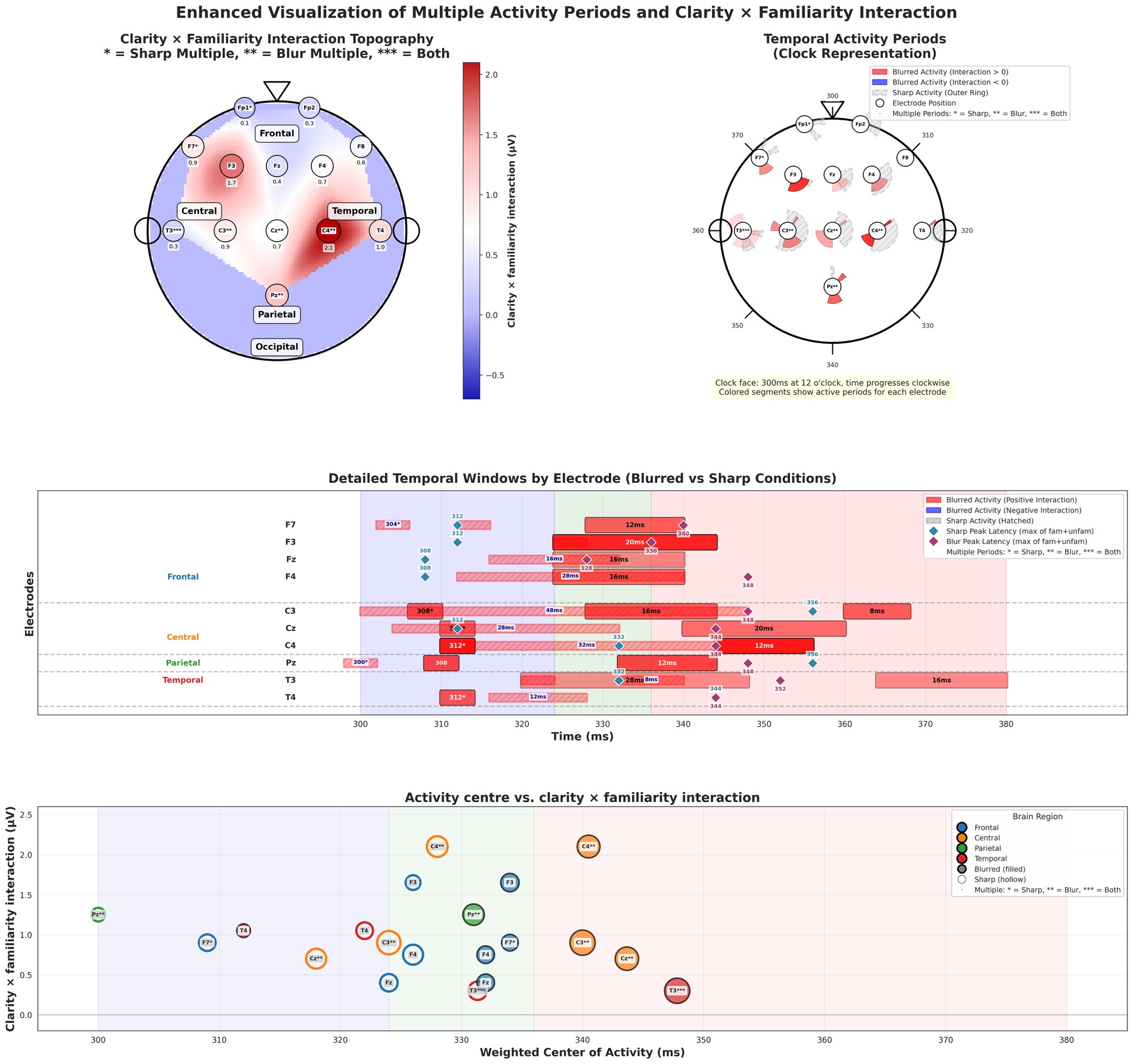
A four-panel scientific figure: a scalp topography heat map with labelled electrodes, a circular clock plot encoding activity periods, a horizontal timeline of temporal windows per electrode, and a scatter plot of activity centre against effect size.
Event-related potentials · 2026 Four questions about one effect, in one figure. Where it sits on the scalp, when it falls in the epoch, how long it holds per electrode, and how large it is. One set of electrode labels runs through all four panels, so a finding can be followed from one to the next. Figure reproduced with the permission of Oksana Shelest.
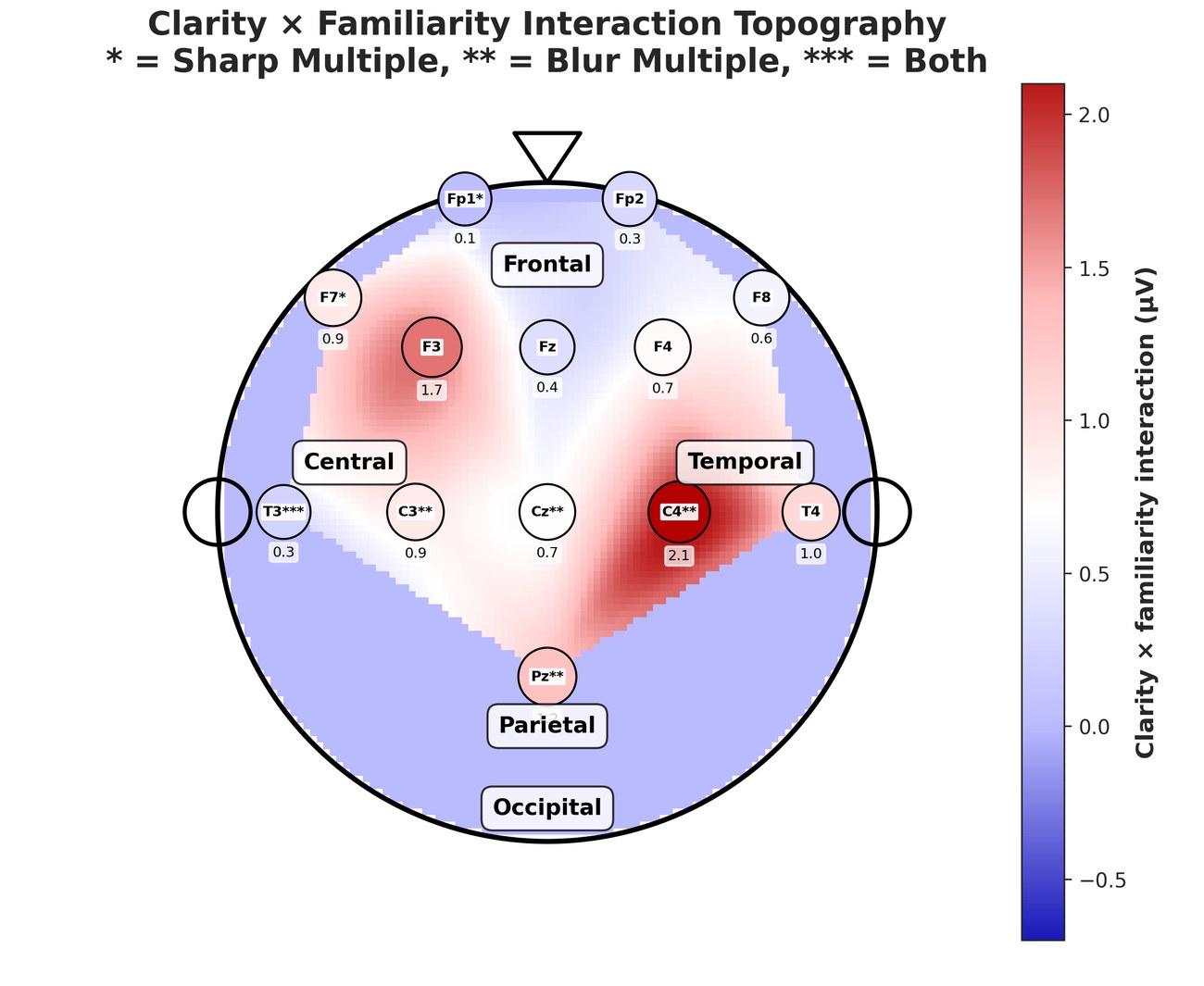
Close view of the scalp topography: a head outline with nasion marker, an interpolated red-to-blue field, and ten-twenty system electrodes labelled with values in microvolts.
Event-related potentials · topography detail Scalp topography at the peak. A signed quantity on a diverging scale with zero pinned at white, electrodes at their 10–20 positions carrying their own values — readable as a field or as a table, whichever the reader needs. Figure reproduced with the permission of Oksana Shelest.
DynamWorks LLC · Founder & CEO · 2023–present

On-device AI products

An independent practice whose products are in the App Store rather than in a slide deck — a Tamil and Tamil Brahmi keyboard, a handwriting-to-font app, a browser computer-vision playground, and an agentic video-analysis framework released open source. Inference runs on the user's machine, which forces every honest engineering tradeoff at once: memory, latency, model size, quality.
3App Store products live
478Facial landmarks tracked in-browser
0Installs needed to run the demos
AGPLVisionUX released open source
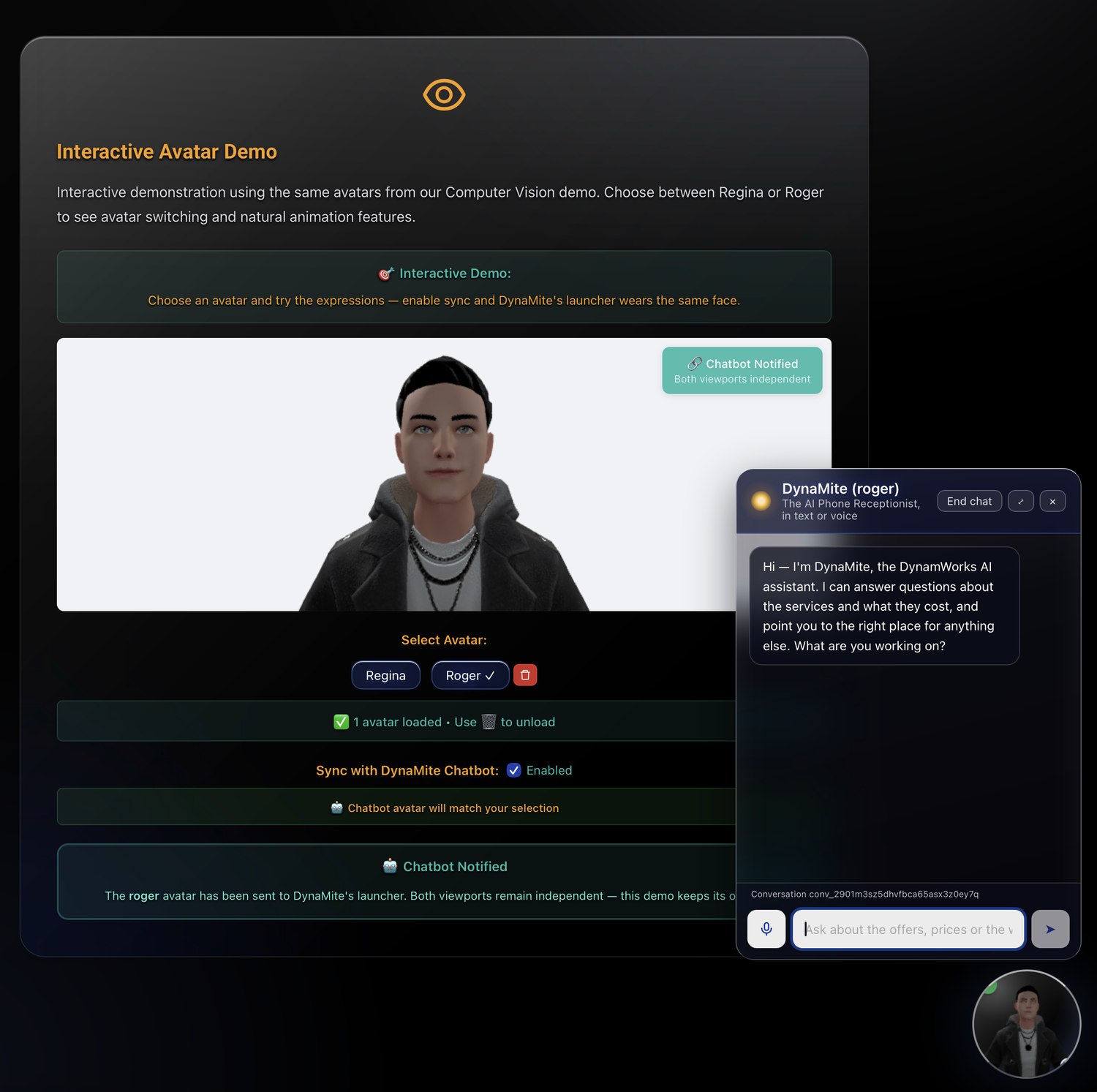
Screenshot of an interactive avatar demo: a rendered 3D avatar in a viewport with selection controls and a sync toggle, an open chat panel headed DynaMite (roger) showing the assistant greeting a visitor, and a chat launcher in the corner wearing the same avatar.
DynamWorks · live on the site Real-time 3D, state sync and a grounded assistant in one page. Choosing an avatar updates two further views — the chat panel header and the corner launcher — each holding its own copy rather than sharing one. The assistant answers only from documents I control: it quotes published prices, books nothing and sees no records.

Things you can open right now

Real-time pose detection, 478-point landmark tracking and edge detection, all processed locally — no install, no server, nothing uploaded. Open it on a laptop with a webcam and it runs in the tab.

dynamcv.app.dynamworks.com  ·  dynamworks.com  ·  VisionUX on GitHub

Dr. Reem Sharhan Naturopathic Medicine · Fractional COO & CTO · 2024–present

A clinic's software, and its operations

Perirosa — an App Store patient app for perimenopause and HRT tracking that produces twelve-month clinical summary PDFs, built with no account, no cloud and no analytics: a year of a patient's most sensitive data stays on their phone, out of reach of the clinic and of me. Alongside it, an AI phone receptionist that triages callers and answers strictly from per-question scoped sources — it books nothing, reaches no records and gives no medical advice. I also run the practice's bookkeeping, filings and administrative workflows.

Perirosa · iPhone Entering an HRT regimen, on the device. Dose, route, category and schedule are modelled the way the clinic asks about them, so what a patient records arrives already in the shape a clinician reads. Nothing leaves the phone.
TaxMD · Fractional CTO · 2026

Fractional CTO to a regulated tax platform

Led a twenty-four-person cross-functional team under a single technical vision, consolidating nineteen services and four datastores onto one system of record while the platform stayed live for its users. The engagement has ended; the rest of it stays with them.

19 → 2Services consolidated
4 → 1Datastores to one system of record
24Cross-functional team led
Curium Pte. Ltd. · CTO & Co-founder · Singapore · 2021–2023

Multi-sensor calibration for autonomous systems

Co-founded a venture-backed sensor company and led its technology. The calibration work began in 2020, a year before the company was incorporated: continuous dynamic calibration across LiDAR, radar and camera, running under real-time embedded constraints rather than as an offline batch. Productized as Curium Calibration Edge and launched at CES 2023; covered by a published international patent application. The domain is far from biology — registering one modality onto another is the same problem.
8×Valuation growth in 24 months
15Engineers built across 3 countries
€1MEureka GlobalStars grant secured
CESProduct launched, 2023
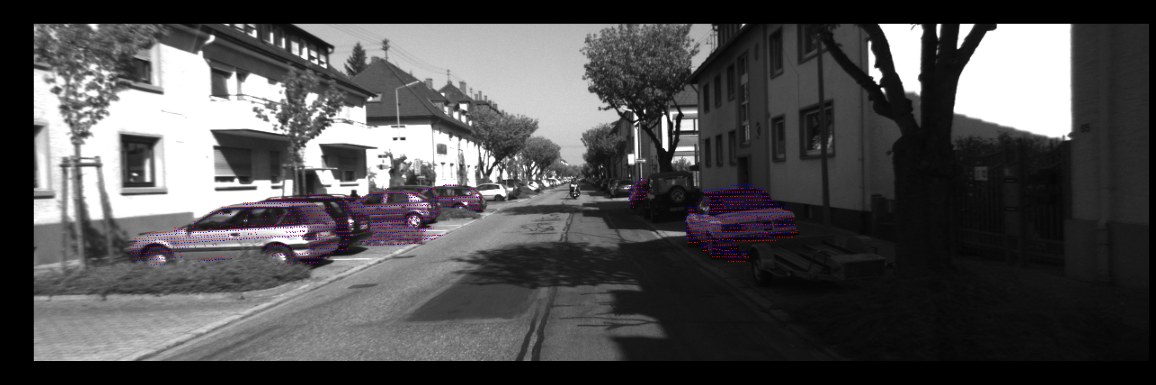
A greyscale street scene with parked cars, overlaid with dense red and blue LiDAR points landing precisely on the vehicle bodies.
Proc. SPIE Future Sensing Technologies · 2020 LiDAR returns projected onto the camera frame after calibration. The photograph is held in greyscale so the points carry all the colour, and the test of the method is simply whether they land on the cars.
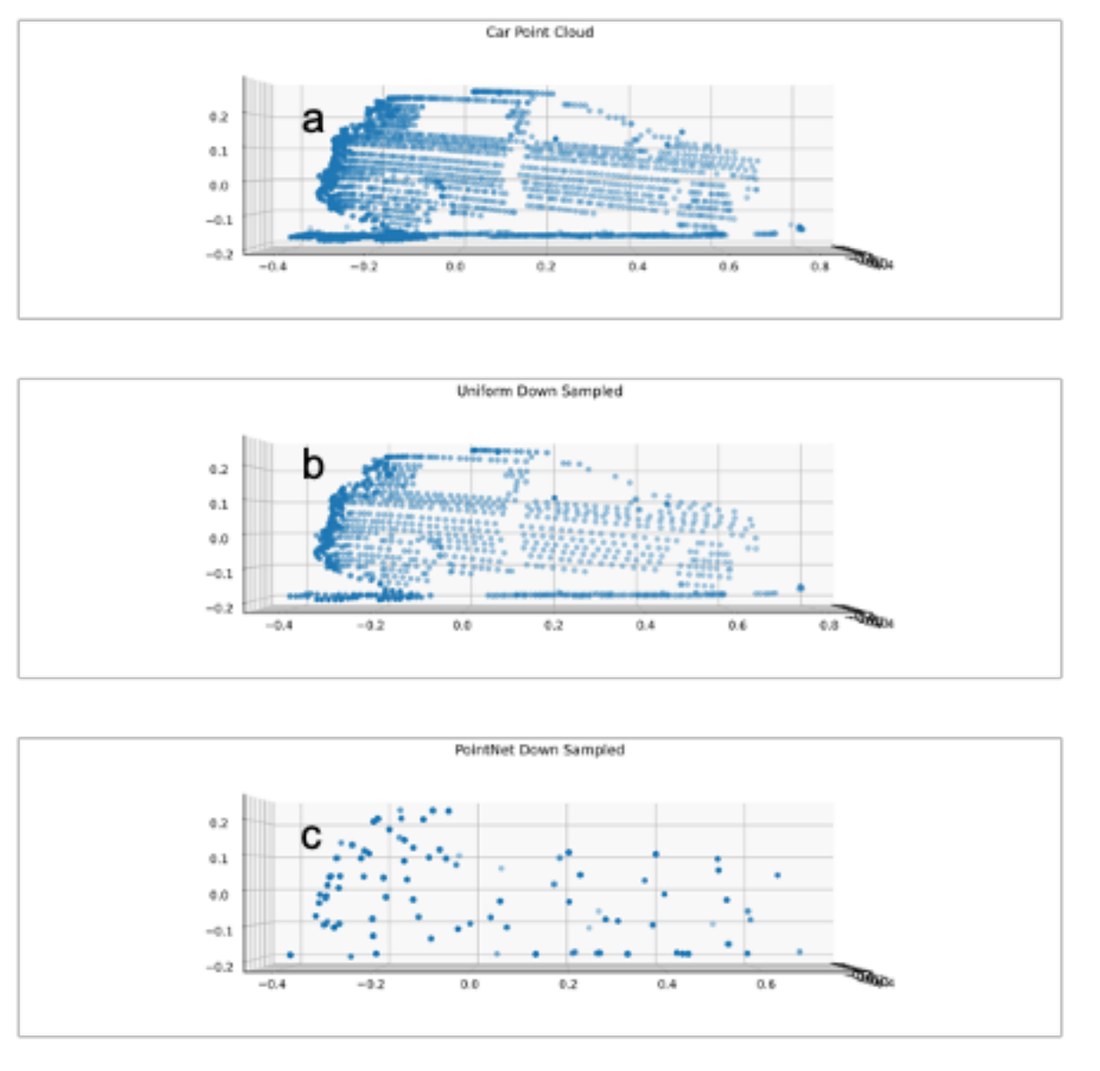
Three stacked 3D scatter plots of a car-shaped point cloud: the full cloud, a uniform downsample, and a sparser set of learned feature points.
Proc. SPIE Future Sensing Technologies · 2020 The same object at three densities. Full point cloud, uniform downsample, learned feature points — on identical axes, so what each reduction throws away is arguable rather than assumed.
Alzheimer's Therapeutic Research Institute, USC · Senior Computer Scientist · 2016–2021

Machine learning into clinical research practice

Led the eight-person team building an AI-powered electronic data capture platform for multi-site clinical research — the platform that helped secure a $70M NIH grant — and deployed a medical-coding model that cut coding time from days to hours. Multi-modal classification from video and audio, and adverse-event classifiers benchmarked against the established method rather than reported in isolation. Four peer-reviewed publications, presented at AAIC in London and Chicago. Patient data; nothing from it belongs on a public page.

$70MNIH grant supported
60%First-year adoption, medical-coding AI
8Engineers and scientists led
days → hoursMedical coding turnaround
The Scripps Research Institute · Research Scientist · 2013–2016

Docking software that is still in use

Built AutoDockFR, a protein–ligand docking engine that handles receptor flexibility — up to fourteen flexible side chains — where most tools assume the receptor holds still, and AutoSite, which finds where a ligand can bind and predicts the shape it would take there. Both ship in the AutoDock Suite and are still cited a decade on, which is the only durability test that counts for research tooling.
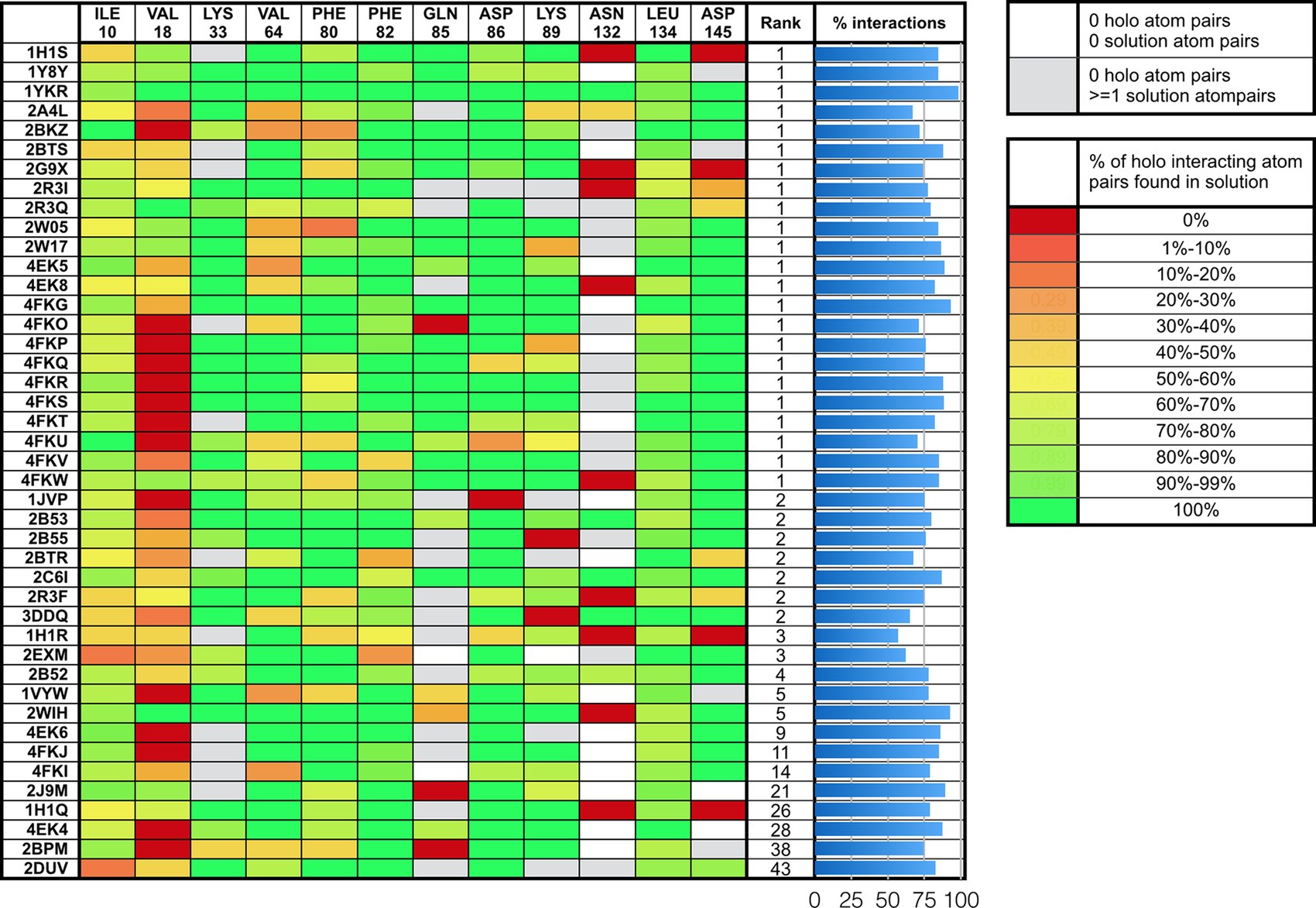
Matrix heat map of recovered ligand-receptor atomic interactions across dozens of structures, coloured red to green, with a companion bar chart.
AutoDockFR · PLoS Computational Biology, 2015 Native interactions recovered — one row per system, one column per flexible side chain. Docked poses reproduced 79.8% of native interactions on average.
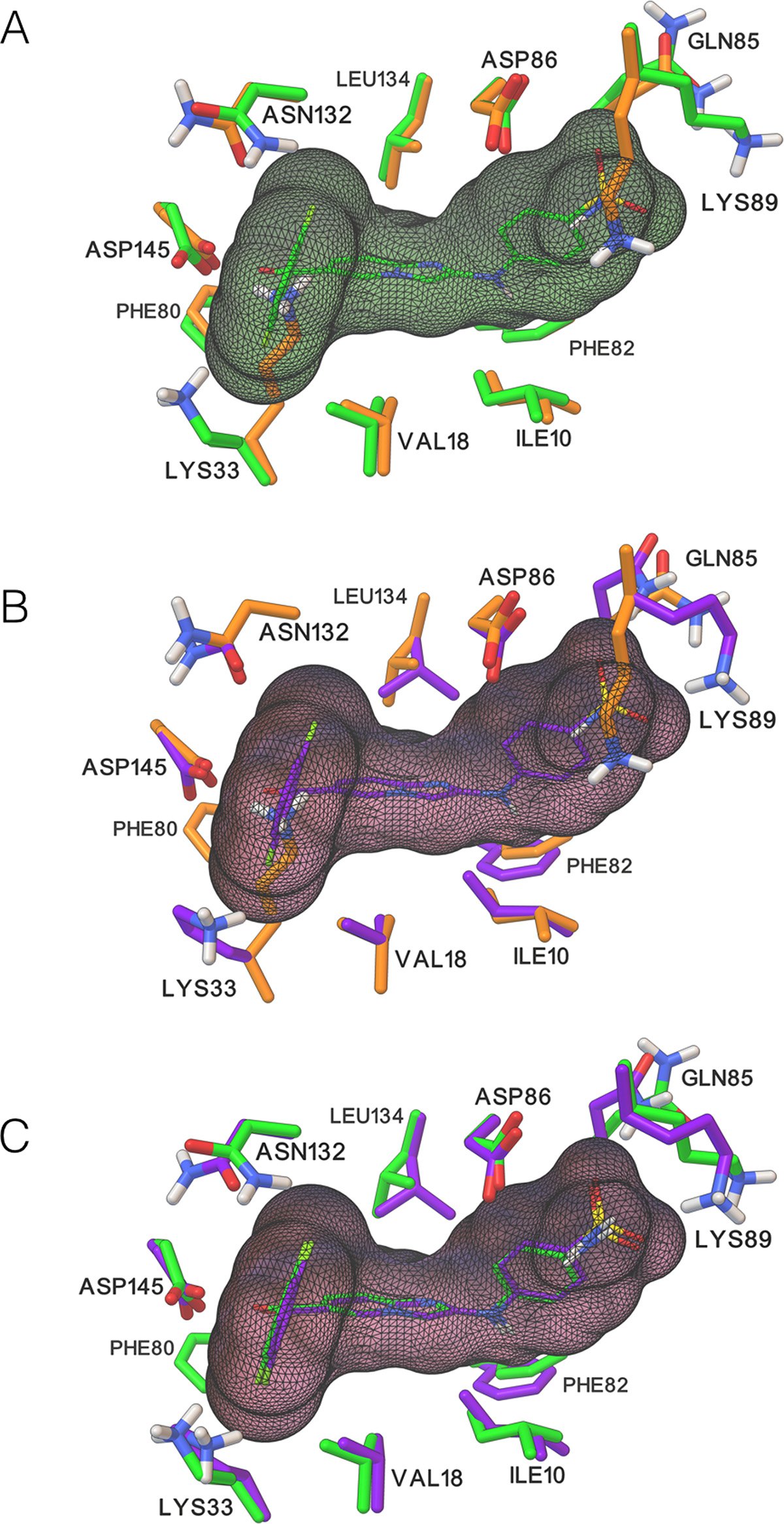
Three stacked panels showing a triangulated wireframe mesh enclosing a ligand, with labelled side chains drawn twice in contrasting colours.
AutoDockFR · 2015 Apo, holo and docked conformations on one mesh. Side chains are drawn twice in contrasting colours, so the reader sees lysine 33 swing out of the pocket to admit the ligand without losing the eleven that did not move.
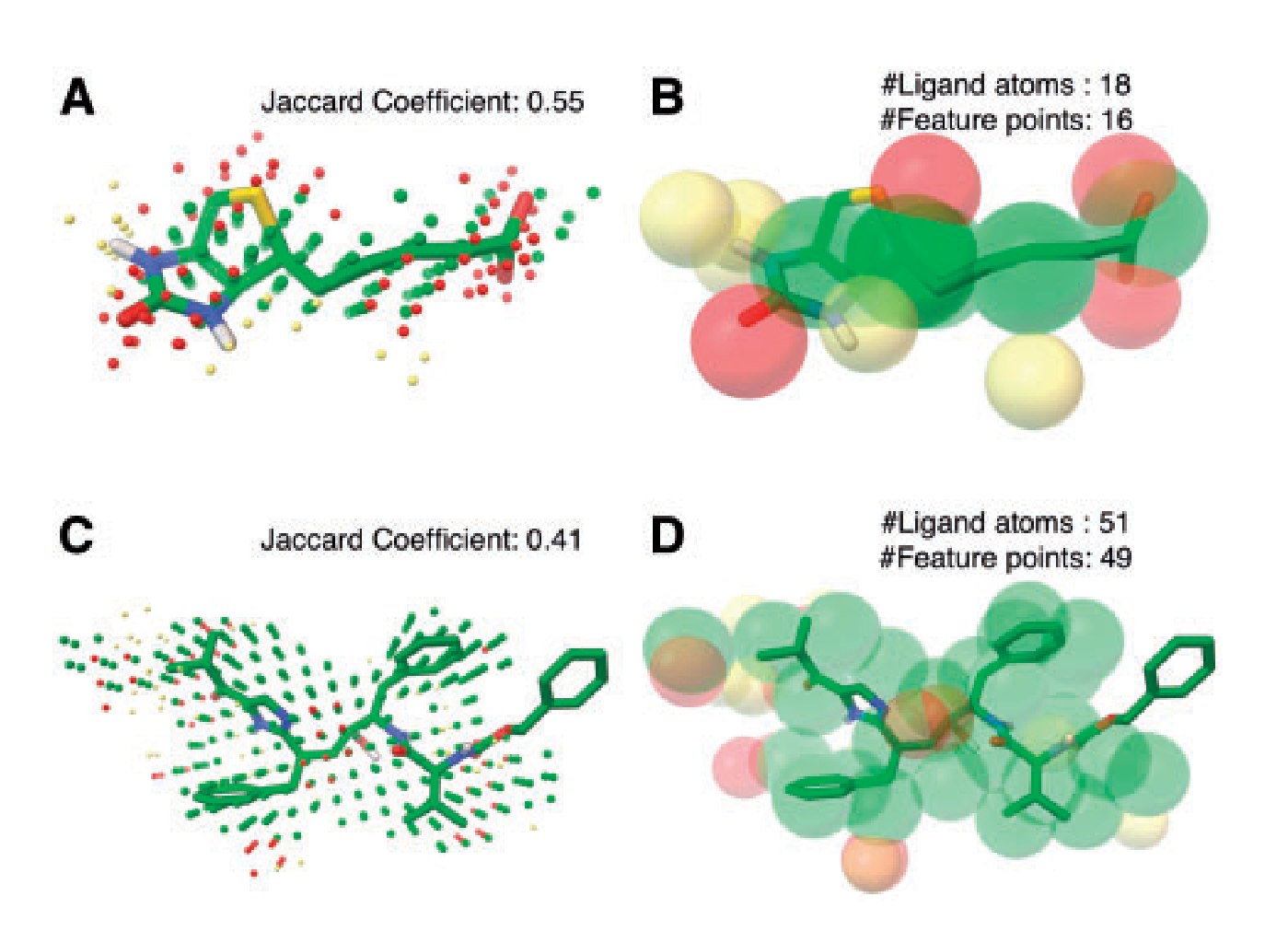
Four panels showing green stick ligands among scattered coloured points, and the same ligands overlaid with large translucent spheres marking predicted feature points.
AutoSite · Bioinformatics, 2016 Predicted feature points against the measured ligand. Raw point cloud on the left, clustered prediction as translucent spheres on the right; colour carries atom type.
Singapore-MIT Alliance · Doctoral research · 2008–2013

Designing inhibitors that resistance cannot outrun

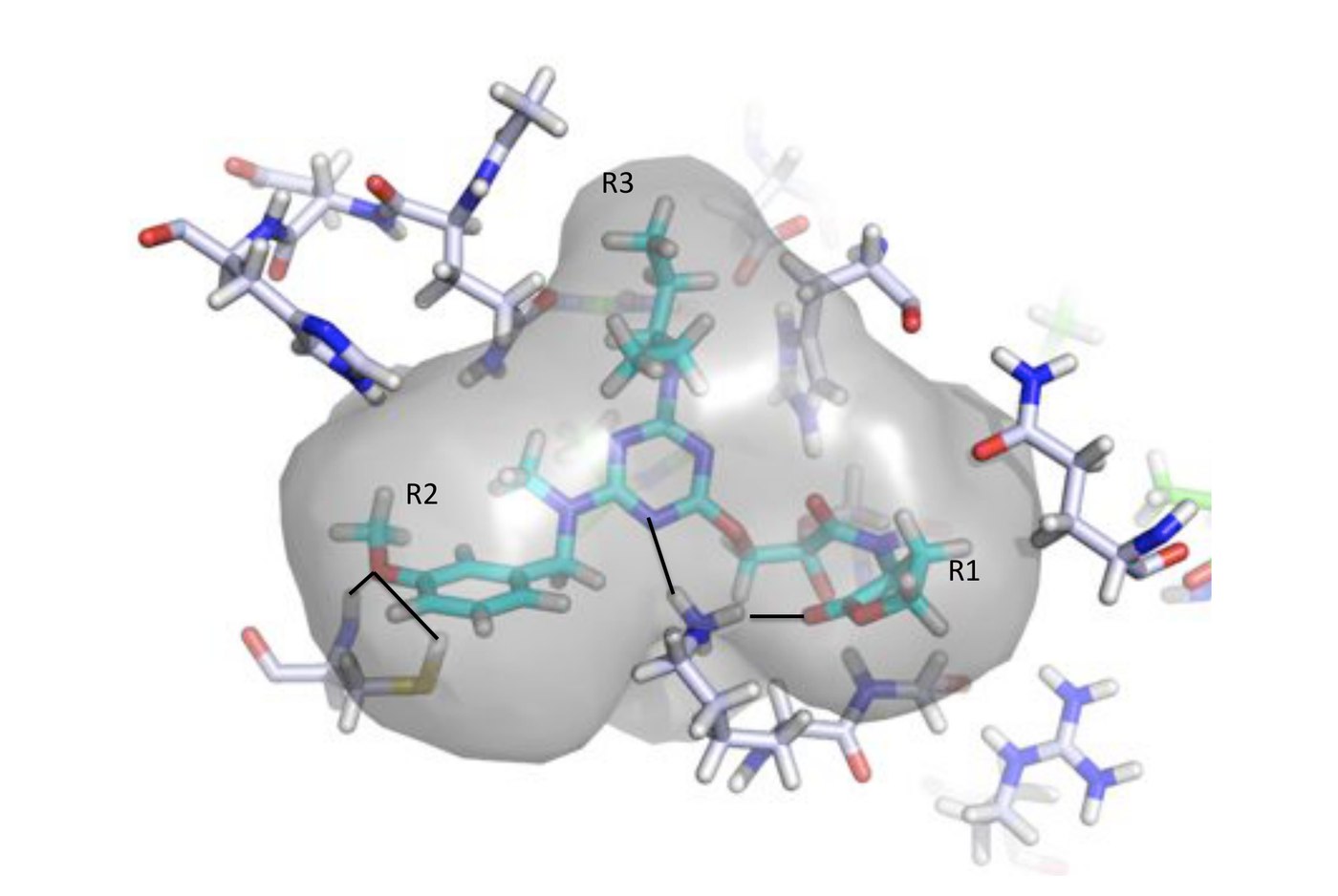
Computational design of inhibitors for the hepatitis C NS3/NS4A protease, shaped to stay inside the space the natural substrate already occupies — so a mutation that escapes the drug also costs the enzyme its own function. Hierarchical scoring: fast grid energies first, then dead-end elimination and A* to rank candidate functional groups, then expensive accurate energy functions on the survivors.

A designed inhibitor in cyan sticks inside a translucent grey molecular envelope, surrounded by pale receptor residues, with attachment points labelled.
Doctoral thesis · 2013 A designed inhibitor inside the substrate envelope. Surface, ligand and receptor on three layers, with the surroundings held back in a lighter treatment so the eye reads depth instead of clutter.
Moving pictures

Watch it run

A decade apart, both still running. The older is research software that is still cited; the newer runs in your browser while you read this.

AutoDockFR · recorded at Scripps Research The docking software in use. Recorded when the paper was published. The software is still distributed as part of the AutoDock Suite and still cited — which is the only durability test that counts for research tooling.
DynamCV Playground · screen recording Real-time pose and landmark tracking, in the browser. No install, no server, nothing uploaded — the model runs on the machine watching it.
The record

Published, cited, still in use

AutoDockFR — protein–ligand docking with explicit receptor flexibility. PLoS Computational Biology 11(12):e1004586, 2015.
750+ citations
AutoSite — ligand-binding-site identification and key-atom prediction. Bioinformatics 32(20):3142–3149, 2016.
100+ citations
Self-calibration of sensors using point cloud feature extraction. Proc. SPIE 11525:115250M, 2020. With K. Buyukburc and A. Hasnain.
SPIE
3D-3D self-calibration of sensors using point cloud data. SAE Int. J. Advances & Curr. Prac. in Mobility 3(3):1369–1377, 2021.
SAE
Continuous Dynamic Calibration for multi-sensor fusion across LiDAR, radar and camera — co-inventor. Published international patent application WO 2022/031226.
patent application
Full record — 9 peer-reviewed publications across computational molecular modelling, clinical machine learning and multi-sensor calibration. Keynote, SAE WCX 2021.
900+ citations

What I do now

I run DynamWorks, an independent practice taking domain-expert product visions into production — fractional CTO engagements, applied-research sprints, and hands-on delivery for healthcare, research and regulated clients. I take the work where the domain matters as much as the engineering.

Pradeep Anand Ravindranath, PhD, MBA
[email protected] · +1 (858) 366-2815
dynamworks.com · linkedin.com/in/paravindranath

AutoDockFR figures from Ravindranath PA, Forli S, Goodsell DS, Olson AJ, Sanner MF, PLoS Comput Biol 11(12):e1004586 (2015), CC BY 4.0. AutoSite figures (Bioinformatics 32(20), 2016), sensor-calibration figures (Proc. SPIE 11525, 2020) and doctoral thesis figures reproduced by their author. EEG/ERP figure reproduced with the permission of Oksana Shelest.